+140K
Active accounts on the USD Interest product
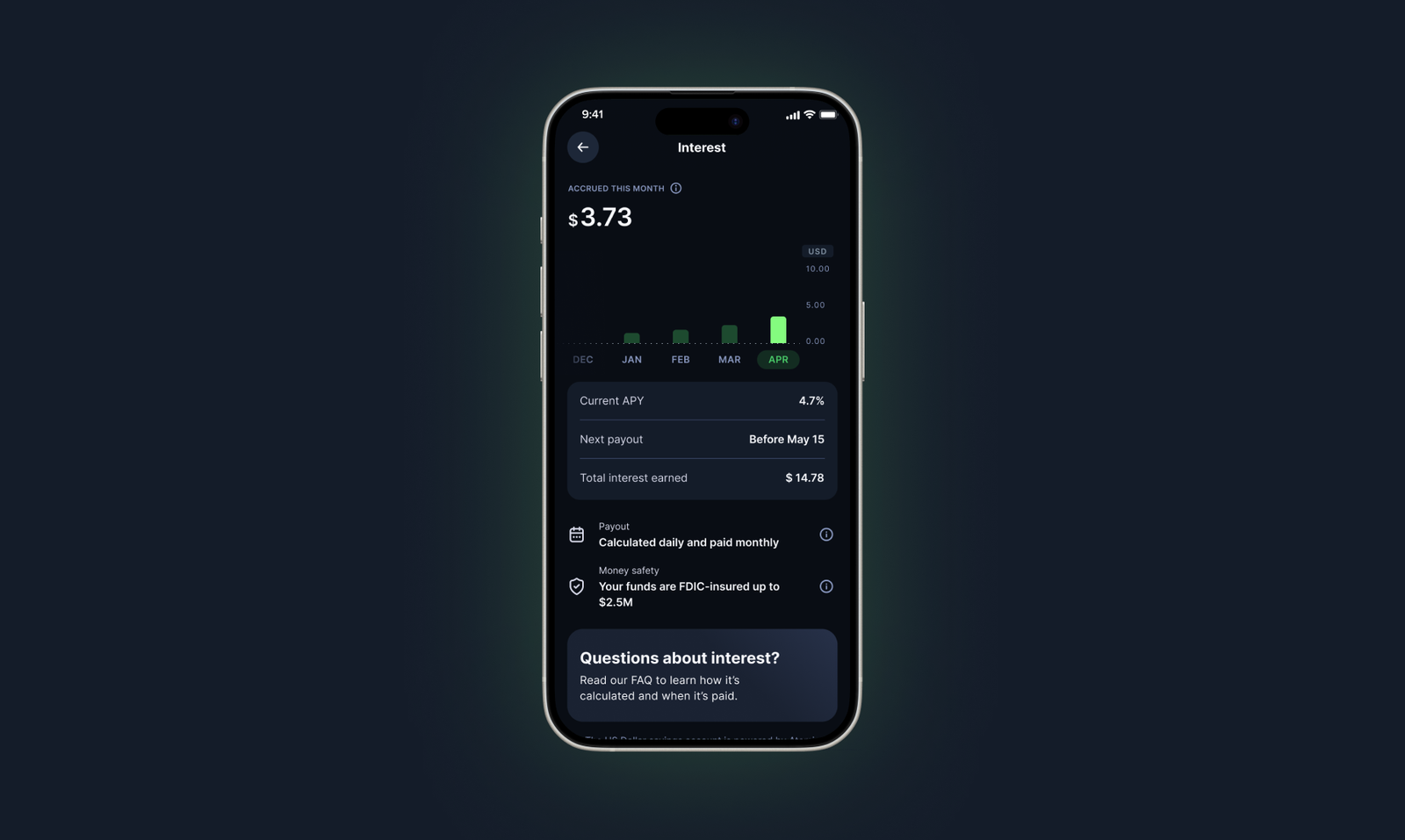
+$76M
Funds on the USD Interest account
+$2M
Interest accrued all time
+190K
Deposits made
I led the full design of Uphold's USD Interest Account, from initial discovery and competitive research through flow architecture, UI design, and user testing. I was the sole designer on this, working directly with product, engineering, and compliance to bring a high-yield savings experience to 97K+ US users.
The USD Interest Account is Uphold's first move toward a neobank offering for the US market. The goal was straightforward: let US users earn interest on their USD balances through a high-yield savings account.
An opportunity in plain sight
Only 18% of Americans use high-yield savings accounts, which means 82% are earning almost nothing on money they're not spending. At Uphold, that translated to 87.6K US users holding idle USD balances on a platform that wasn't working that money for them. Without a yield product, users with savings intent had good reason to move their money elsewhere. A high-yield savings account would fix the retention problem and give Uphold its first credible claim as a day-to-day financial home, not just a trading platform.
Market intelligence before product decisions
Before opening Figma, I ran a competitive analysis of how fintechs and neobanks position high-yield savings: Revolut, Monzo, Marcus, SoFi. At the same time, I worked through Uphold's US user data to understand who we were designing for and where the most addressable segment was.
Competitors lead with APY
A rate race with shrinking differentiation. The opportunity was to stand apart through goal-based, intentional savings framing.
Top 10% hold $280+ in USD
A defined addressable segment with meaningful balances and high conversion potential — the primary design and acquisition target.
No US competitor uses goal-based Pots
No US competitor was doing this, which gave Uphold room for a more human, intentional positioning in a market where everyone races to the same rate.
US base growing from 87K to 97K
Platform momentum that made a savings product timely, not a retrofit.
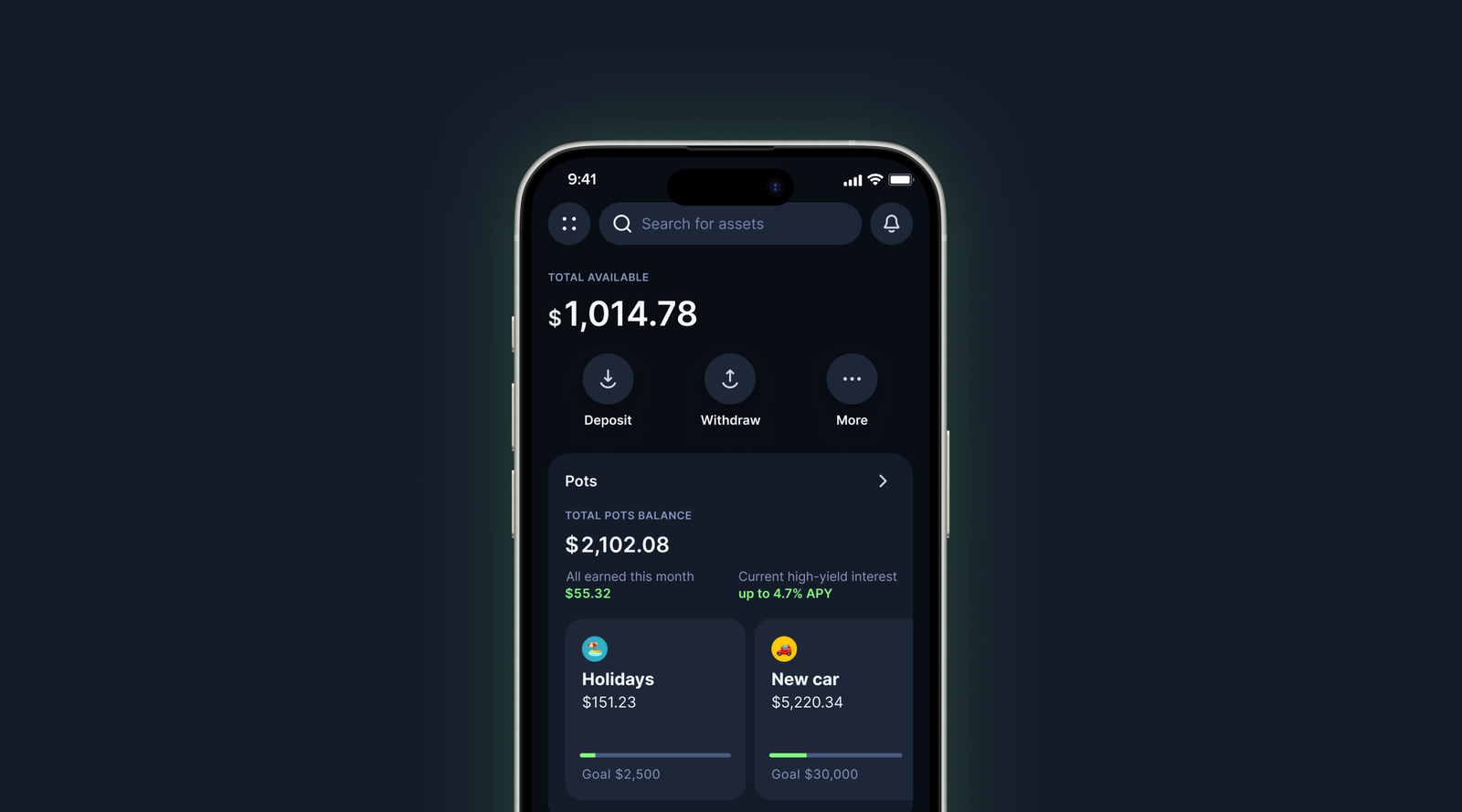
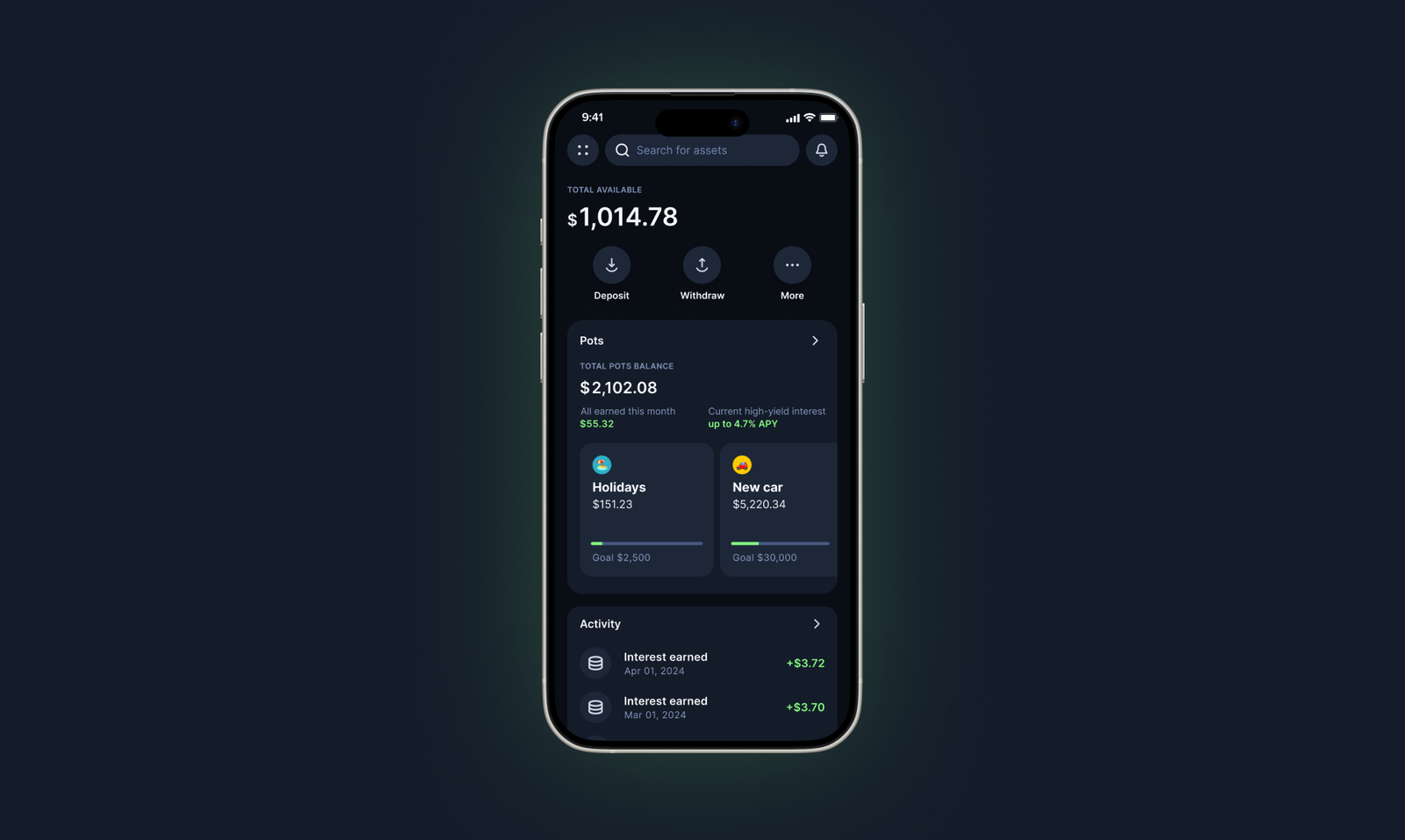
01 — Pots as the core mental model.
Named, goal-based savings containers that mirror how people actually think about money, not how banks categorise it. The competitive analysis was clear: no US competitor was doing this.
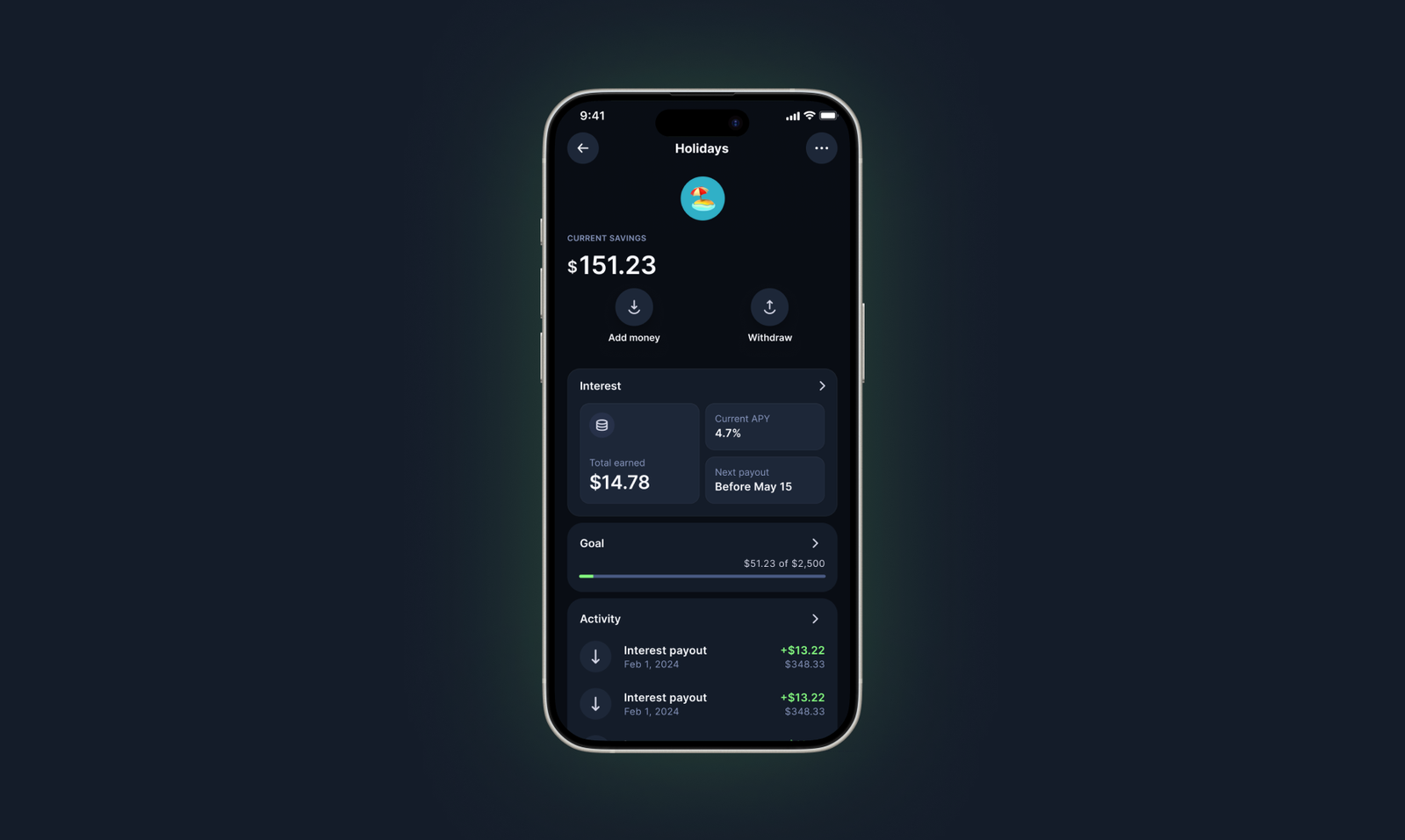
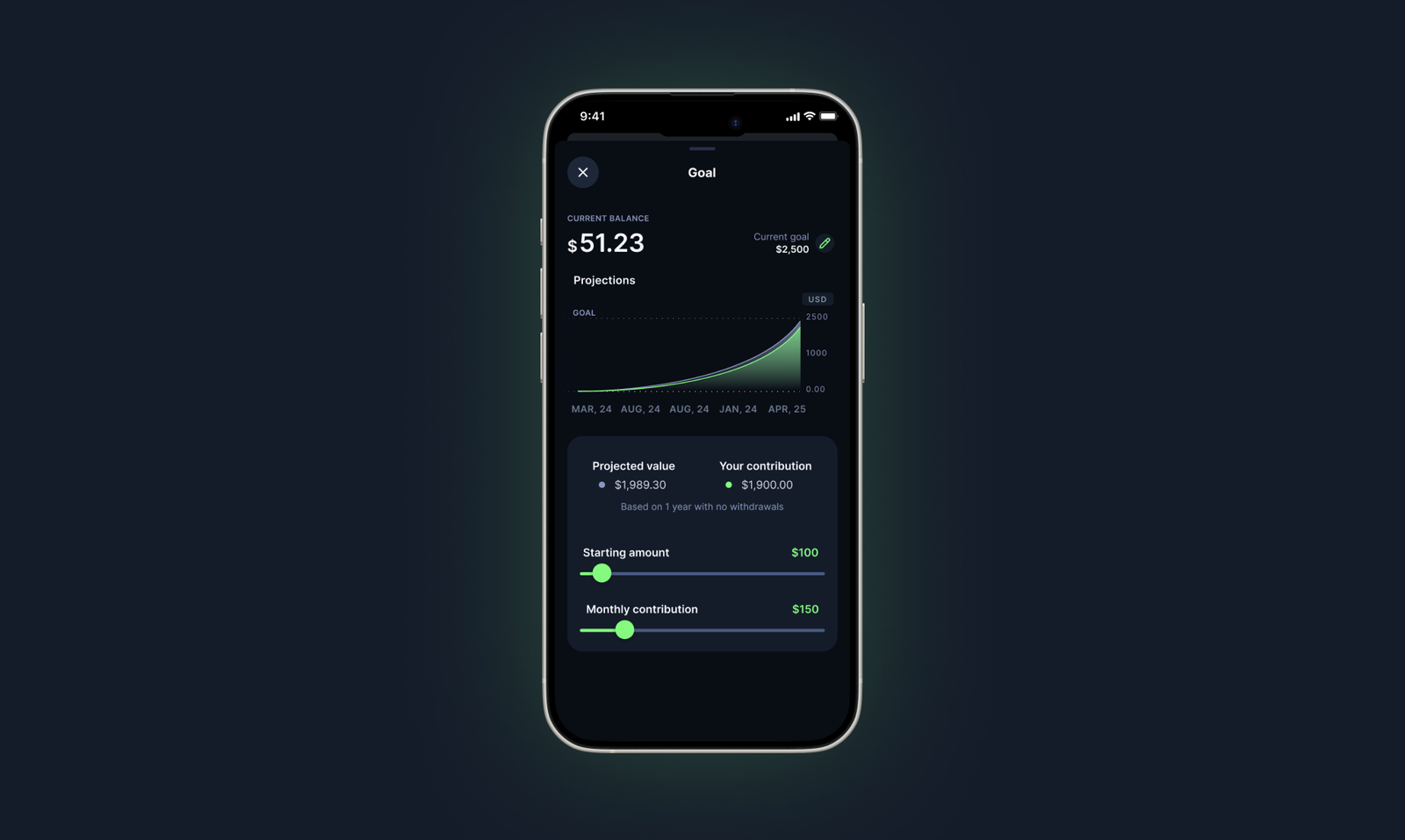
02 — Goal-setting before deposit amount.
The Pot creation flow starts with naming the goal and setting a target, not entering a number. Users see an earnings projection before committing money. Intent before arithmetic.
03 — Differentiation through framing, not rate.
Segmentation data showed our most addressable users are goal-oriented savers, not rate-chasers. The Pot structure gives Uphold a more human positioning where competitors are racing to the same number.
+140K
Active accounts on the USD Interest product
+$76M
Funds on the USD Interest account
+$2M
Interest accrued all time
+190K
Deposits made
Competitive research validates a direction. It doesn't test it.
The Pot mental model has strong support in the competitive analysis. But that's different from whether real US users find it intuitive. A concept test with a small group of users would have separated those two questions much earlier in the process.
A savings product should surface its value continuously, not just at setup.
The onboarding got more attention than the ongoing experience. What does a healthy Pot look like after 6 months, and how does the product communicate that back to the user? The most meaningful moment in a savings product isn't opening it. It's watching it work.